The Business Responsibility and Sustainability Report (BRSR) by SEBI is built on nine foundational principles that guide companies toward responsible, transparent, and sustainable business conduct. These principles help organizations align with India’s sustainability expectations while meeting global ESG trends. Below is a compiled, comprehensive explanation of what each principle emphasizes.
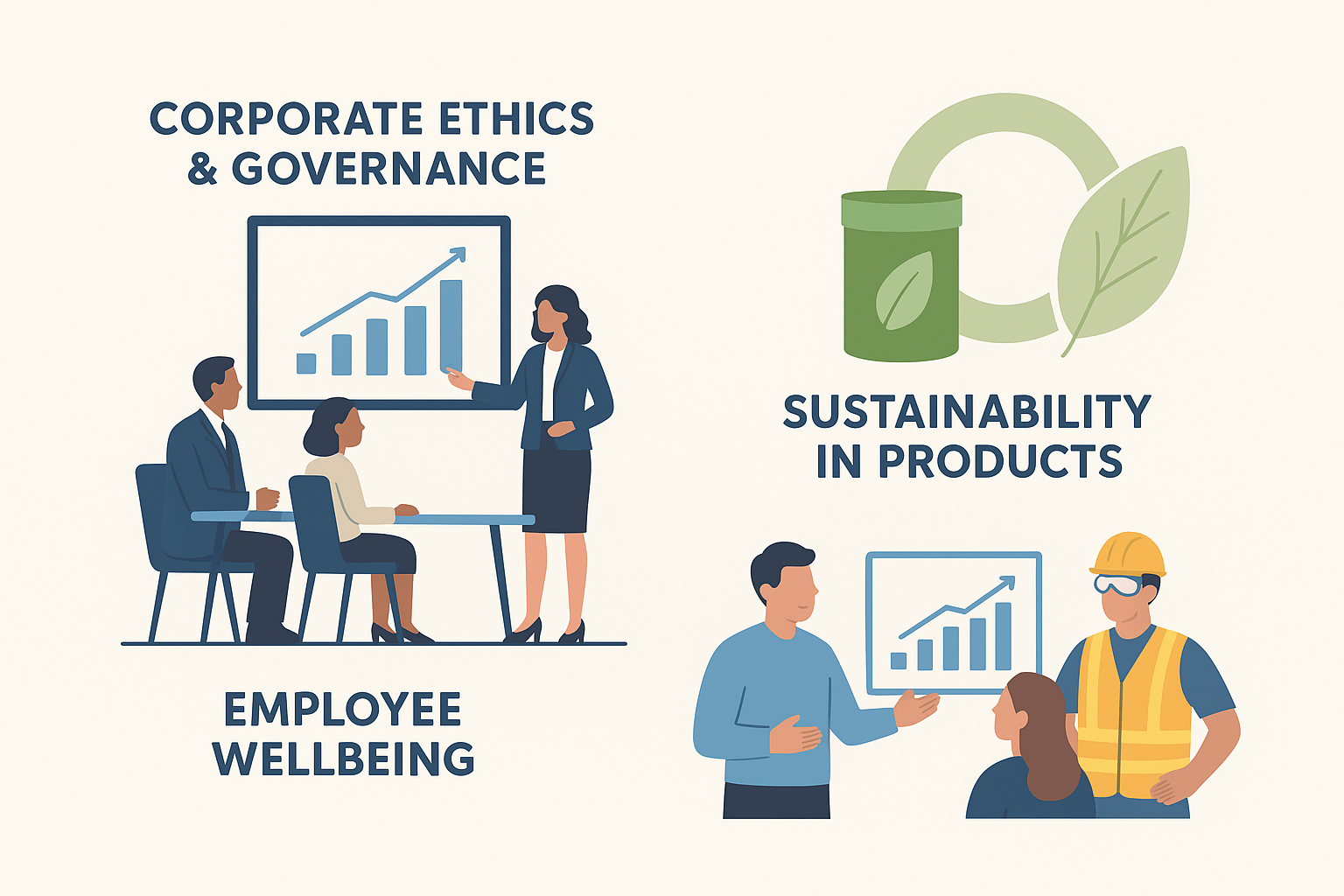
Principle 1: Businesses should conduct and govern themselves with integrity and in a manner that is Ethical, Transparent and Accountable
What this Principle Talks About:
P1 focuses on ethical conduct, transparency in operations, and accountability for actions. Businesses are required to implement strong governance frameworks, prevent corruption, comply with laws, maintain whistle-blower mechanisms, and disclose decision-making in a responsible manner.
Key Coverage Areas
- Anti-corruption and anti-bribery practices
- Code of conduct for employees and board
- Transparency in communication
- Grievance redressal processes
- Responsible decision-making by leadership
Principle 2: Businesses should provide goods and services in a manner that is sustainable and safe
What this Principle Talks About:
P2 highlights the responsibility of businesses to design, produce, and deliver safe, high-quality, and environmentally responsible products and services. Companies must look at lifecycle sustainability, circular economy practices, and safe disposal.
Key Coverage Areas
- Product safety and quality
- Sustainable sourcing of raw materials
- Eco-friendly product design
- Lifecycle assessments
- Packaging innovation
- Consumer safety information
Principle 3: Businesses should respect and promote the well-being of all employees, including those in their value chains
What this Principle Talks About:
P3 focuses on employee welfare, diversity, health and safety, fair wages, and equal opportunities. This covers permanent, contractual, and value-chain workers.
Key Coverage Areas
- Workforce diversity and inclusion
- Health and safety systems
- Fair wages and social security
- Training and capacity building
- Human rights and worker well-being
Principle 4: Businesses should respect the interests of all stakeholders and engage with them
What this Principle Talks About:
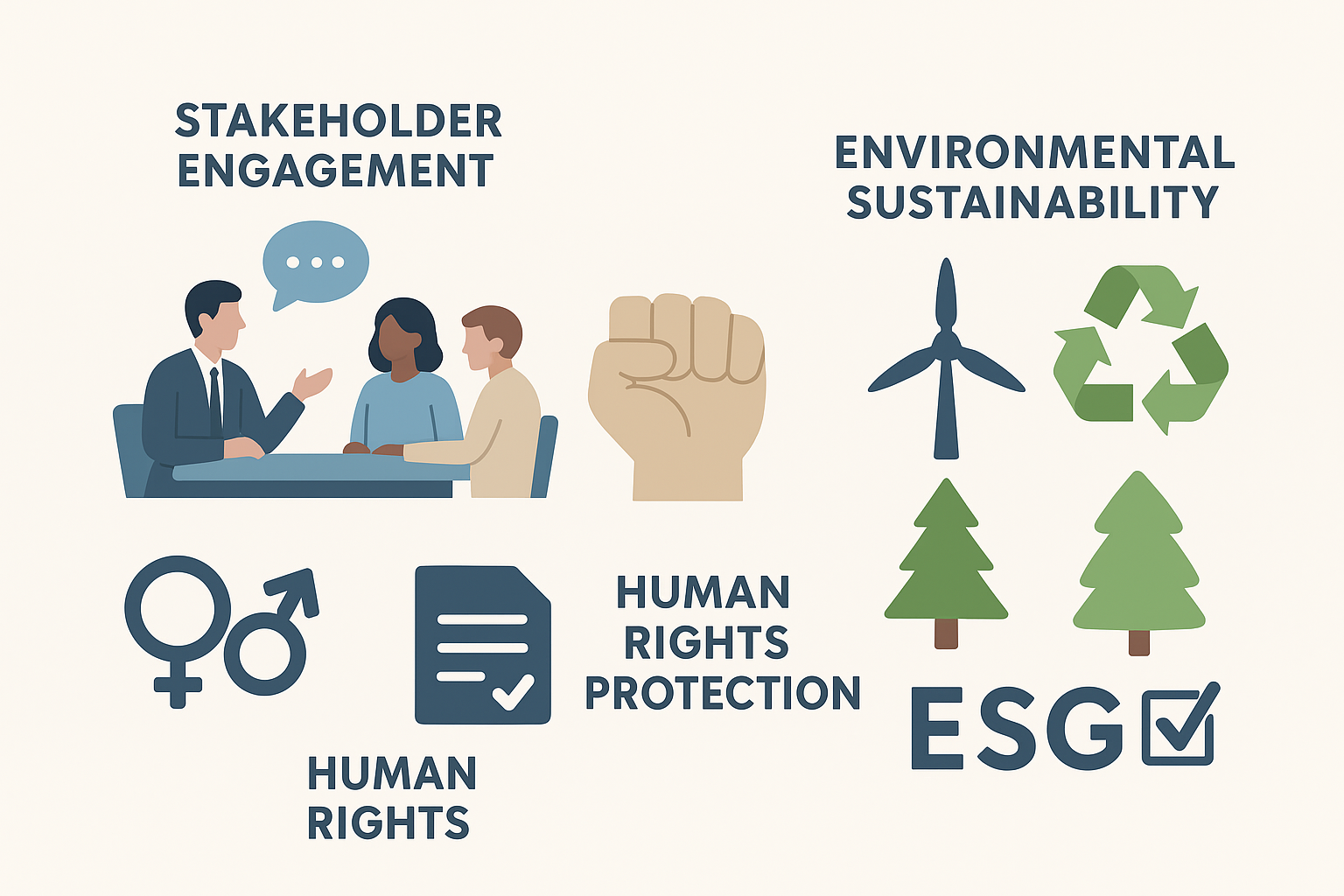
P4 emphasizes meaningful and inclusive stakeholder engagement. Companies must identify stakeholders, understand their concerns, and integrate feedback into decision-making.
Key Coverage Areas
- Stakeholder identification and mapping
- Engagement frameworks
- Addressing concerns of marginalized groups
- Transparent communication
Principle 5: Businesses should respect and promote human rights
What this Principle Talks About:
P5 ensures that companies protect human rights internally and across the value chain. This includes preventing discrimination, forced labour, child labour, harassment, and violations of freedom.
Key Coverage Areas
- Human rights policy
- Zero tolerance for child and forced labour
- Anti-discrimination measures
- Responsible sourcing
- Remediation mechanisms
Principle 6: Businesses should respect and make efforts to protect and restore the environment
What this Principle Talks About:
P6 is the core environmental pillar of BRSR. It requires companies to minimize environmental footprint, reduce emissions, manage waste, conserve water, protect biodiversity, and transition to cleaner technologies.
Key Coverage Areas
- GHG emissions and decarbonization
- Energy efficiency and renewable energy
- Water consumption reduction
- Waste management and circularity
- Pollution control
- Biodiversity preservation
Principle 7: Businesses, when engaging in public policy, should do so in a manner that is responsible and transparent
What this Principle Talks About:
P7 ensures that businesses participate in policy advocacy ethically and transparently. They must avoid undue influence and should act in alignment with national interests and sustainability.
Key Coverage Areas
- Participation in industry associations
- Transparent public policy advocacies
- Responsible lobbying
- Alignment with sustainable development goals
Principle 8: Businesses should promote inclusive growth and equitable development
What this Principle Talks About:
P8 focuses on social impact, community development, CSR, and inclusive progress. Businesses should uplift local communities, support vulnerable groups, and ensure benefits reach a broad set of stakeholders.
Key Coverage Areas
- CSR initiatives
- Community investments
- Rural development
- Skill-building programmes
- Social infrastructure creation
Principle 9: Businesses should be responsive to the needs of consumers and provide value
What this Principle Talks About:
P9 emphasizes consumer rights, safety, transparency, and grievance handling. Companies must ensure high-quality products, safe delivery, responsible marketing, and protection of consumer data.
Key Coverage Areas
- Consumer safety and product quality
- Transparency in communication
- Data privacy and cybersecurity
- Fair marketing practices
- Customer grievance redressal